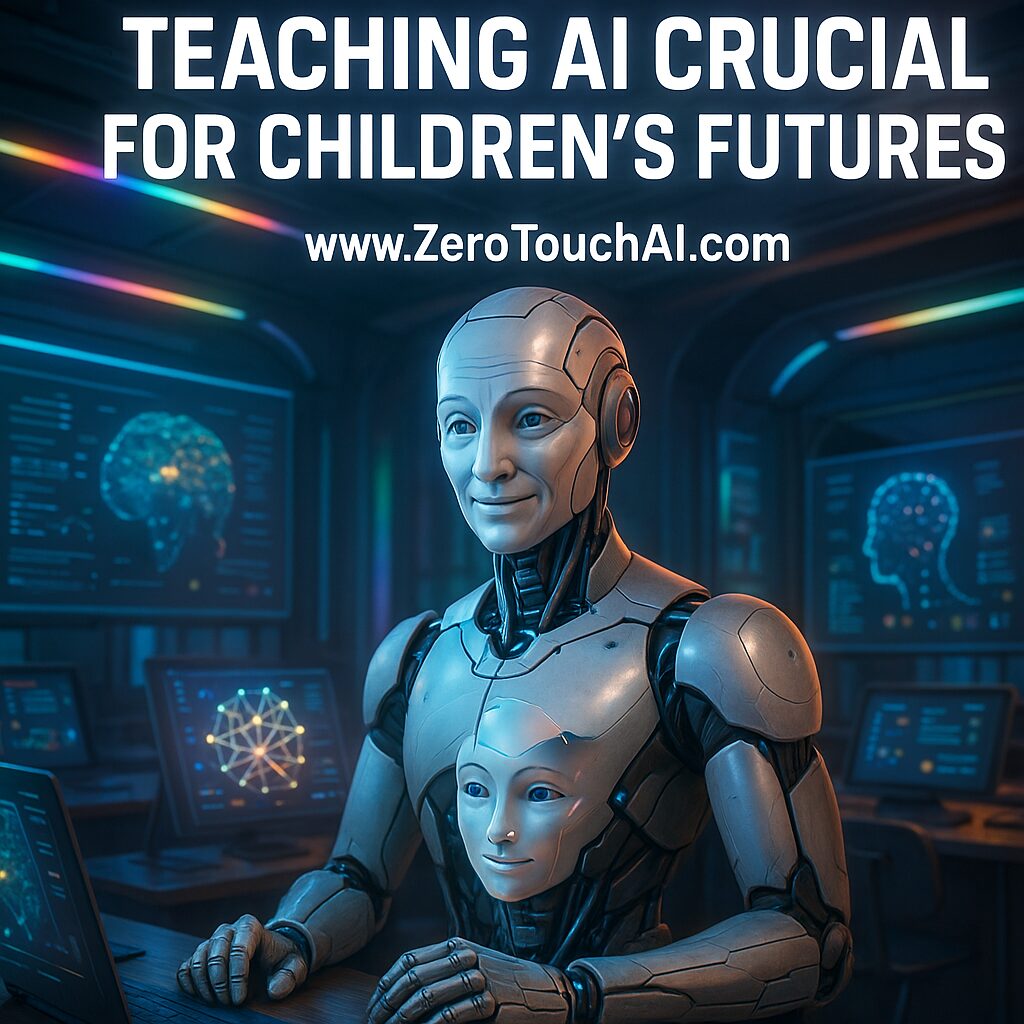
Your kids NEED to learn AI
**The Essential Role of AI in Child Education**
As artificial intelligence (AI) continues its relentless march forward, reshaping industries and personal lives alike, one pressing question emerges: Are we adequately preparing our children for a future where AI is as integral as our daily use of smartphones? In an age where technology is advancing at an unprecedented rate, parents have a crucial responsibility to ensure their children are not just passive consumers but active participants in the digital landscape. To ignore the importance of AI in modern education is to risk leaving our children unprepared for the world they will soon inherit.
**AI: The New Challenge for Parents**
For many parents, the concept of actively teaching AI to their children may seem daunting or even unnecessary at first glance. Yet the reality could not be further from the truth. According to some thought leaders, neglecting this aspect of education could be likened to negligence. “If you’re a parent and you’re not teaching your kids AI,” one such leader has remarked, “I’m not going to call it child abuse, but it’s in that same vein.” This analogy may sound extreme, yet it emphasizes the perceived gravity of the situation. A parent’s role in education has always been to prepare their children for the future, and AI is undeniably a part of that future.
Currently, many parents and educators are not incorporating AI into their everyday learning processes—a missed opportunity, given the transformative potential of these technologies. Often, this oversight is not due to a lack of intent but rather a lack of familiarity. Parents who themselves are not utilizing AI in their daily lives may find it difficult to guide their children in this digital frontier. To offer an anecdote, one parent queried their son, Max, about the presence of AI education in schools. Max responded, “Actually, my buddy got in trouble at school for using it for a project.” This underscores a significant disconnect: while traditional education systems are wary of AI, its integration into our lives continues unabated.
**The Importance of AI Proficiency in the Modern World**
The question then becomes not if AI will play a role in the future, but how significant that role will be. Much like smartphones, which have become extensions of ourselves, AI’s influence will permeate every corner of life—from personal communication to professional environments. As such, AI literacy will be essential.
– **Adaptability:** AI will require individuals to be more adaptable in the workplace, making proficiency in AI a key competitive advantage.
– **Problem Solving:** Children versed in AI will find themselves better equipped to handle problem-solving tasks, both in school and in their eventual careers.
– **Critical Thinking:** Encouraging children to engage with AI will also foster critical thinking, prompting them to consider the ethical implications and limitations of these technologies.
By integrating AI education into our children’s learning repertoire, we not only enrich their problem-solving and critical thinking skills, but we also encourage them to consider the broader ethical implications of technology on society.
**Bridging the Current Gap in AI Education**
It’s clear there is a gulf between the current status of AI in education and where it should be. Bridging this gap requires concerted efforts from both parents and educational institutions. However, these efforts must begin at home. Here are a few practical ways parents can introduce their children to the world of AI:
– **Encourage Exploration:** Provide resources for children to explore simple AI tools online. Websites and applications offer beginner-friendly platforms for coding and AI experimentation.
– **Engage in Discussions:** Have open discussions about AI—what it is, how it works, and its potential impacts on different aspects of life.
– **Educational Programs:** Enroll children in workshops or online courses aimed at teaching AI and programming from an early age.
It is crucial for schools to revise their approach to AI from being an external adversary, something to be wary of, to an integral part of the curriculum. Yet, it’s not solely up to educators; parents can and should spearhead this educational movement to ensure their children are not left behind.
**Conclusion: The Future is Now**
In a world that is rapidly advancing, education cannot remain static. The integration of AI is no longer a distant notion but a present reality. As parents, it is our responsibility to usher in a new wave of AI literacy that aligns with the changing tides of technological advancement. We must consider the long-term implications of how we choose to prepare our children today.
By preparing them to understand and utilize AI effectively, we provide them with the tools to thrive in an increasingly digital environment. After all, in this digital age, who else is better positioned to impart these skills other than those who guide them through every other aspect of life? How can we expect our children to navigate the challenges of tomorrow without arming them with the knowledge and skills they need today? If we instill an understanding and curiosity about AI in our children, the future will not be something to fear, but instead, a vast terrain of endless possibilities waiting to be explored.