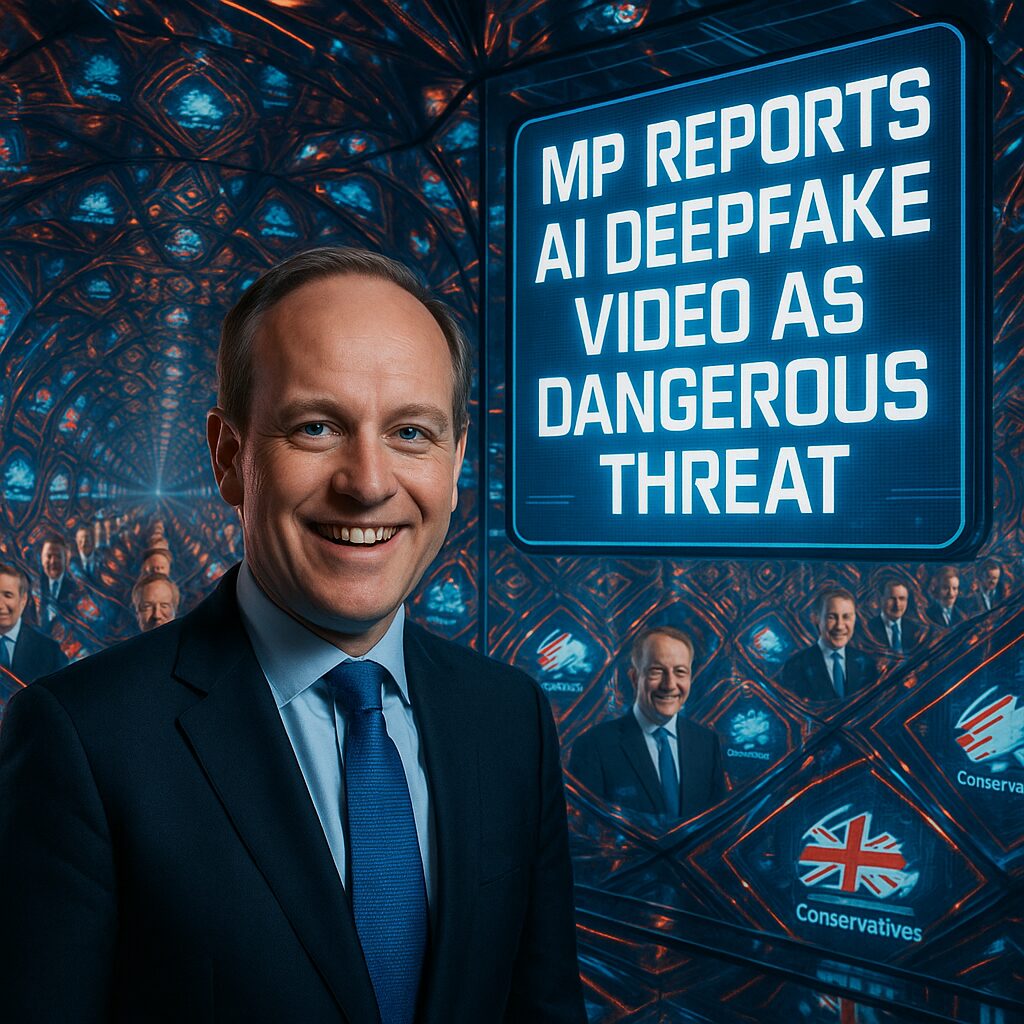
Tory MP reports ‘AI-generated deepfake’ video announcing his defection to Reform UK
# The Dark Side of Deepfakes: A New Threat to Democracy
In a world where technology rapidly evolves, our greatest asset can sometimes become our biggest threat. As the lines between real and artificial blur, we find ourselves grappling with new forms of disinformation that challenge the very core of our democratic values. Such is the case with the alarming rise of AI-generated deepfake videos, as highlighted by the recent incident involving George Freeman, a Conservative MP.
## The Deepfake Dilemma
George Freeman, the Tory MP for Mid Norfolk, recently fell victim to a disturbing trend: the creation and dissemination of AI-generated deepfake videos. In a video that quickly spread across the internet, Freeman appears to announce his defection to Reform UK. The video shockingly portrays him stating that “the time for half measures is over” and criticizing his own party by saying the “Conservative party had lost its way.” Freeman was quick to declare that he had “no intention of joining Reform or any other party,” and emphasized that the video was a complete fabrication. He summarized the situation succinctly by stating that such artificial creation “has the potential to seriously distort, disrupt, and corrupt our democracy.”
“Regardless of my position as an MP, that should be an offence,” Freeman said about the unauthorized use of his image and voice. His swift response to report the matter to the authorities underscores the perilous nature of unregulated digital manipulation.
## A Personal Encounter with Digital Disinformation
The incident puts Freeman in an uncomfortable position, questioning whether he was the target of a politically motivated attack or just a victim of a “dangerous prank.” Reflecting on the potential motivations, Freeman lamented, “There has been a huge increase in political disinformation, disruption, and extremism on both the left and right in recent months.”
His experience is a sobering reminder that the threat of misinformation doesn’t simply affect public figures; it impacts citizens and democratic institutions on a broader scale. As a former minister for science, innovation, and technology, Freeman is no stranger to the capabilities of modern technology, but witnessing its misuse was a firsthand lesson in its destructive potential.
## The Human Cost of AI-Generated Disinformation
Deepfakes can have severe repercussions, affecting personal reputations, public trust, and the integrity of our democratic processes. Here are some of the dangers posed by these manipulated videos:
– **Erosion of Trust**: When people cannot trust what they see or hear, faith in public figures and political systems weakens.
– **Manipulation of Public Opinion**: Deepfake videos can sway voters and alter the outcomes of elections by spreading fake news and false narratives.
– **Psychological Impact**: Individuals targeted by deepfakes may suffer from stress, anxiety, and other mental health issues due to public misunderstandings.
George Freeman’s ordeal reminds us of the critical importance of regulating this technology and fostering the ability to distinguish between authenticity and fabrication.
## The Learning Moment: Combatting AI-Disinformation
In responding to this alarming incident, Freeman’s plea was clear: do not share the video further, and report it to the authorities. The public has a crucial role in mitigating the spread of misinformation. Here’s what we can do:
– **Educate Ourselves**: Understanding deepfake technology, how it works, and recognizing potential red flags empowers us to differentiate between real and fake content.
– **Critical Evaluation**: Before sharing content, especially politically charged material, cross-verify with reputable sources.
– **Promote Digital Literacy**: Encouraging discussions around digital ethics and investing in educational programs can create more informed citizens.
To counter the rise in deepfakes, efforts must extend beyond individual actions. Policymakers and technology platforms should collaborate to develop stringent measures that control deepfake production and distribution, ensuring there are clear repercussions for those who propagate such misinformation.
## What’s Next for Society?
The deepfake incident involving George Freeman raises pressing questions about the future of our information ecosystems. How prepared are we, as societies, to handle the growing sophistication of AI technologies that can undermine truth and trust? The journey towards information integrity is challenging, but our democratic values depend on it.
In the face of an ever-evolving digital landscape, where do we draw the line between technological advancement and ethical responsibility? As we continue to navigate these moral quandaries, it is paramount that we foster an environment where technology serves the truth, not distorts it. The question remains: How do we stay vigilant and proactive against digital threats while embracing the benefits of AI innovation?
In addressing these issues, we arrive at a critical juncture that calls us to act decisively and wisely. Our democracy hangs in the balance, and as individuals and communities, we must rise to the challenge of safeguarding it.