Revolutionizing Business Automation: How Google’s Robots are Redefining Task Refinement
In today’s fast-paced world, businesses are continually seeking ways to enhance efficiency and streamline operations. As automation becomes more sophisticated, Google’s robots are at the forefront of revolutionary task refinement. Utilizing human demonstrations and simulations, these robots are executing complex activities with remarkable accuracy and improved efficiency. This advancement in robotic learning not only promises to transform workflow processes but also offers businesses an innovative edge in automation.
Understanding Robotic Learning and Its Impact
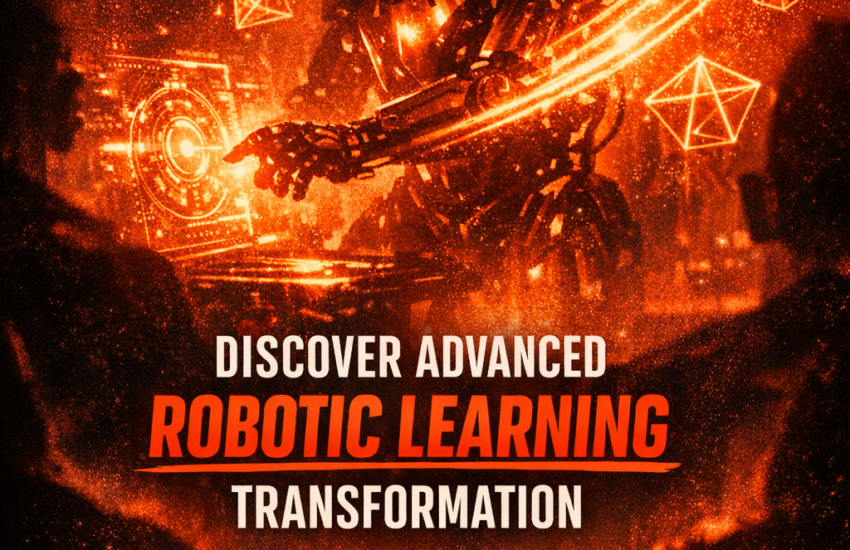
The concept of robotic learning involves teaching machines to mimic human actions through demonstration, simulation, and repetitive practice. Google’s robots are leveraging cutting-edge technologies to map human movements into machine parameters, thus enhancing their ability to perform complex tasks such as throwing a beanbag or operating a trash can. Through simulated learning, these robots are able to refine their skills and improve task completion times and success rates significantly.
For businesses, this robotic learning technology translates into a formidable opportunity. By adopting such advancements, organizations can achieve greater productivity and efficiency, tackling tasks that were previously beyond the scope of automation.
The Process of Task Refinement
Task refinement through robotic learning involves a series of structured processes. Google’s approach includes three critical stages—learning from human demonstrations, simulation-based practice, and real-world feedback integration. By analyzing and simulating human movements, robots can execute tasks with higher precision. This efficient learning from minimal inputs underscores the potential of AI automation in business settings.
Furthermore, by using coding, simulation, and visual feedback methods, these robots are capable of iteratively improving their performance. As a result, task refinement is achieved not only by observations but also through constant learning and adaptation.
The Benefits of AI Robotics in Business Automation
Implementing artificial intelligence robotics in business automation offers several advantages. First and foremost, it leads to significant efficiency improvement by reducing human error and increasing the speed of task execution. With continued learning through simulations, robots can quickly adapt to new and complex tasks, allowing businesses to maintain a competitive edge.
Additionally, AI automation reduces the need for manual intervention in routine operations, freeing up human resources to focus on strategic initiatives. By streamlining workflow automation, organizations can optimize their operational processes, reduce costs, and enhance overall productivity.
Conclusion
As we witness the advancements in robotic learning technology, businesses are presented with a unique opportunity to leverage these innovations for improved operational efficiency. Google’s robots exemplify how artificial intelligence and task refinement can transform everyday business practices. By integrating such technologies, companies can not only streamline their operations but also gain a competitive advantage in their respective industries.
Ready to revolutionize your business with AI automation? Learn how artificial intelligence can automate your processes by booking a free demo today!
#Robotics #AI #TaskRefinement #AutomationTechnology #SimulatedLearning #AIInnovation #ZeroTouchAI