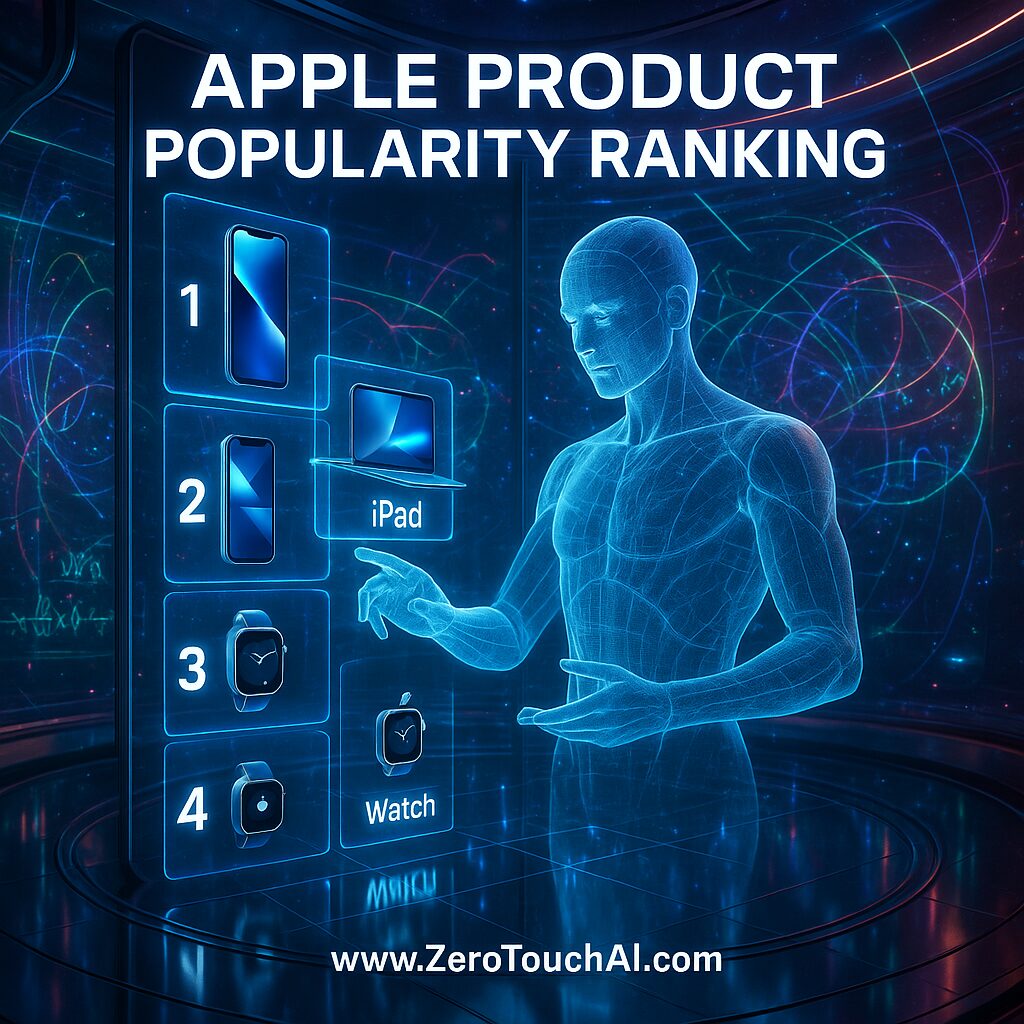
Rank The Most Popular Apple Products in AI Search
**Navigating the Popularity Contest of Apple Products in the AI Era**
In the modern world, the landscape of technology is constantly changing, influenced by a myriad of factors that shape consumer preferences and perceptions. Among the trailblazers in this arena is Apple, a company synonymous with innovation and seamless user experience. When contemplating which of its products reigns supreme, one can’t help but wonder: Does public opinion align with actual usage? A recent discussion highlights an intriguing exercise of ranking Apple products based on AI search popularity, leveraging Brand Radar data. What unfolds is a curious blend of expected leaders and surprising underdogs, shedding light on how AI reviews diverge from traditional metrics like sales.
**Apple’s Tech Titans: Unveiling the Popularity List**
The journey begins with a ranking of Apple’s iconic lineup: the iPhone, AirPods, MacBook, Apple Watch, and iPad. Each product holds its own legacy, influencing not only Apple’s image but also broader tech trends. According to Brand Radar, which captures AI reviews, the lineup is as follows:
– **iPhone**: Unsurprisingly, the iPhone sits at the pinnacle. With its groundbreaking features and constant evolution, it continues to be a staple in the hands of millions, embodying the smartphone revolution.
– **AirPods**: These wireless wonders claim the second spot. AirPods, with their minimalist design and superior sound quality, have transformed the way we listen to music and interact with personal assistants.
– **MacBook**: Occupying the third place, the MacBook stands as a symbol of elegance and performance, adored by professionals and creatives alike for its power and design.
– **Apple Watch**: In fourth place, the Apple Watch represents the bridge between traditional timekeeping and smartphone versatility, promoting not just health but a connected lifestyle.
– **iPad**: Finally, the iPad rounds off the ranking. Once a pioneer of tablets, it perhaps faces stiff competition from its own kin and other brands in the tablet market.
**A Personal Reflection on AI Popularity Metrics**
In contemplating this ranking, one might feel a mix of agreement and contention. While the iPhone’s position as a leader is expected given its cultural significance and sales dominance, the rest of the list offers room for debate. Speaking from personal experience, I have found that despite their position in AI search, the usability and function often dictate my preference. Here’s a closer look at the dynamics at play:
– **Function Over Fame**: Despite its lower ranking, I find the iPad to be an incredibly versatile tool, particularly for media consumption and creative tasks. Its larger screen and intuitive interface make it unparalleled when performing certain tasks.
– **The Underrated Companion**: The Apple Watch, although not as frequently searched, serves as a reliable health companion. Its features extend beyond notifications, allowing users to monitor fitness goals, track sleep, and even take ECGs on-the-go.
– **The Workhorse**: Meanwhile, the MacBook has been a staple in my daily work routine, its efficiency unmatched by other devices. For professional tasks, its reliability stands firm, regardless of its position in popularity rankings.
**The Learning Moment: Interpreting AI Driven Popularity**
Taking a step back to understand the nuances of the ranking sparked an insightful realization. AI popularity, driven by search queries and reviews, reflects a dynamic conversation rather than a definitive verdict on product quality or usage. This presents a valuable learning opportunity:
– AI metrics enrich our understanding of tech preferences but should not overshadow personal experiences or tangible data such as sales figures.
– **Influence of Trends**: Popularity in AI searches can be swayed by cultural trends, marketing campaigns, and viral moments, painting a picture that is as fluid as it is informative.
– **The Role of Functionality**: Sales data might better capture long-term user satisfaction and functionality, aspects that AI reviews sometimes overlook in favor of novelty or hype.
By delving into these aspects, we uncover a broader, more nuanced narrative about what it means to be ‘popular’ in the tech world. It becomes evident that the essence of these products cannot be fully captured through searches alone.
**Where Do We Go from Here?**
Reflecting on this exploration raises thought-provoking questions: How do we, as consumers, define the ‘best’ product when faced with data that highlights perception over proliferation? Perhaps a deeper question lies in understanding how much influence we allow AI-driven insights to have over our purchasing decisions. As we navigate this digital age, might there be more value in diversifying our approach—balancing AI generated insights with personal experience and traditional metrics?
In the end, while AI popularity rankings offer a snapshot of the current landscape, they serve as one variable among many, inviting us to question, explore, and ultimately define for ourselves what value and innovation truly mean in our tech-infused lives.