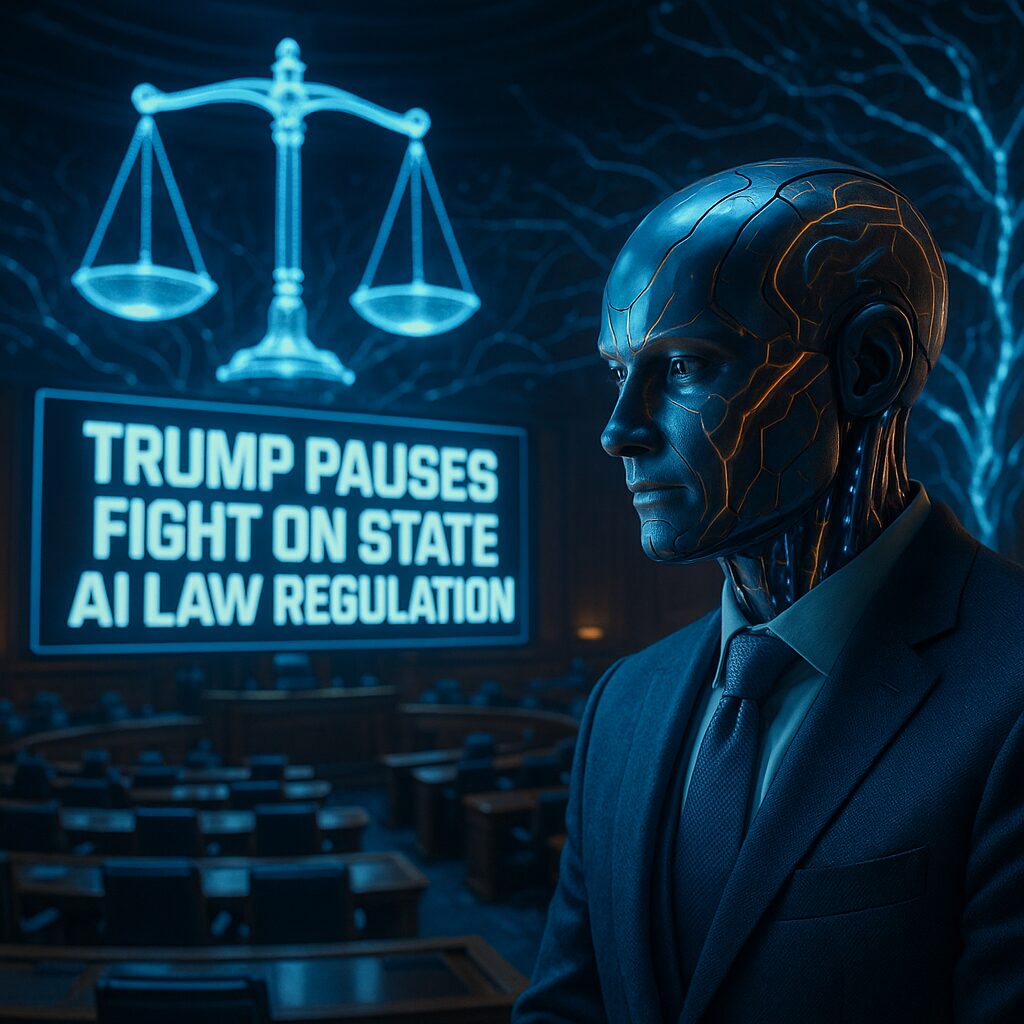
Trump administration might not fight state AI regulations after all
# The Battle for AI Regulation: A Federal vs. State Standoff
In recent years, the rapid advancements in artificial intelligence (AI) have ignited fiery debates across the United States. At the heart of these discussions is a crucial question: Who should control AI regulation? The Trump administration has brought this question to the forefront, as it pushed for a unified federal standard, before backing down amidst a torrent of bipartisan opposition.
## A Unified Federal Standard: Necessary or Overreach?
The Trump administration’s endeavor to establish a unified federal standard for AI regulation was marked by a significant conviction: “The industry needs one Federal Standard instead of a patchwork of 50 State Regulatory Regimes,” the president asserted in a social media post. Such a standard, they argued, would eliminate the complexities and inefficiencies bred by varied state-specific regulations.
The concept of a unified federal standard seems straightforward. It promises consistency across states and a simplified framework for corporations to follow. With burgeoning technologies like AI, consistency across jurisdictions can stimulate innovation by minimizing the bureaucratic shuffles and compliance hoops tech firms must navigate. But is the pursuit of singular governance truly in the best interest of technological development and public welfare?
The challenge is striking a balance between innovation and safety. A national standard could potentially quash state-level attempts to address unique local concerns about AI — a sentiment vividly expressed in the bipartisan wave of opposition that met the Trump administration’s proposal.
## The Struggle for Control: The Personal Saga
The drama around AI regulation mirrors the broader struggle between federal and state powers, a struggle steeped in decades of historical precedent. The Trump administration’s attempts to cement federal control were thwarted in dramatic fashion, when a proposed 10-year ban on state AI regulation was scrapped in a decisive 99-1 Senate vote. This endeavor, part of what was dubbed the “Big Beautiful Bill,” signified an enormous political push to centralize AI governance.
Yet, this failure did not signal the end of the federal initiative. The administration reportedly began drafting an executive order aimed at challenging state AI regulations through an AI Litigation Task Force. This ambitious maneuver included the threat of withholding federal funds from non-complying states. However, ultimately, the executive order was put on hold. The report from Reuters suggests that political opposition — including dissent from within the Republican party — played a key role in this pivotal decision.
The response from Silicon Valley was equally turbulent. AI regulation has always been a contentious subject, with strong opinions on either side. Companies like Anthropic faced criticism from within the Trump administration for their support of state-level AI safety regulations, such as California’s SB 53. The tech hub’s involvement underscores the complexity of this issue: on one hand lies the pursuit of innovation, and on the other, the imperative of safeguarding public interests.
## Learning from the Standoff: The Value of Local Empowerment
The saga of the halted executive order offers a profound learning opportunity. It provides insight into not just the structural dynamics of AI regulation but also the broader implications of centralized governance. History reveals that innovation often thrives in environments where states retain the flexibility to experiment with policies and regulations.
Let’s distill the key lessons from this encounter:
– **Local Solutions for Local Problems**: States are uniquely positioned to address local issues and nuances, providing tailor-made regulatory frameworks that reflect the specific needs and concerns of their populations.
– **Fostering Innovation Through Diversity**: A diverse regulatory landscape allows for experimentation and innovation. States serve as “laboratories of democracy,” where successful policies can be replicated across jurisdictions, while unsuccessful ones serve as cautionary tales.
– **The Danger of Overreach**: Federal overreach can breed resistance and hamper innovation. Collaborative approaches that respect state autonomy often result in more effective and sustainable solutions.
By embracing these principles, the nation can navigate the rocky terrains of AI regulation without stifling innovation nor disregarding the safety and privacy concerns of its citizens.
## Moving Forward: Who Will Lead the Charge?
As we ponder the future of AI regulation in America, we must consider the critical question: Who will lead the charge? Will it be the States, with their distinctive insights and localized approaches, or will a unified federal standard eventually prevail? Perhaps a hybrid solution exists — a harmonized framework that respects both federal and state powers, encouraging innovation while safeguarding public interests.
The AI regulation debate is emblematic of broader socio-political dynamics, reflecting the ongoing balancing act between unfettered technological growth and the cautious stewardship of public welfare. As technology continues to grow at an unprecedented pace, these discussions will only become more crucial.
What steps should be taken to ensure this dialogue remains productive rather than disruptive? How can states and the federal government collaborate to create a regulatory environment that fosters safe and fair technological advancement for all?
In answering these questions, we may well shape the future trajectory of AI within our society and beyond. The resolution will depend not only on political wrangling but on the strength and vision with which each constituency steps up to the challenge.