The golden age of television didn’t disappear. It moved to YouTube.
**Title: YouTube: The New King of Television Streaming**
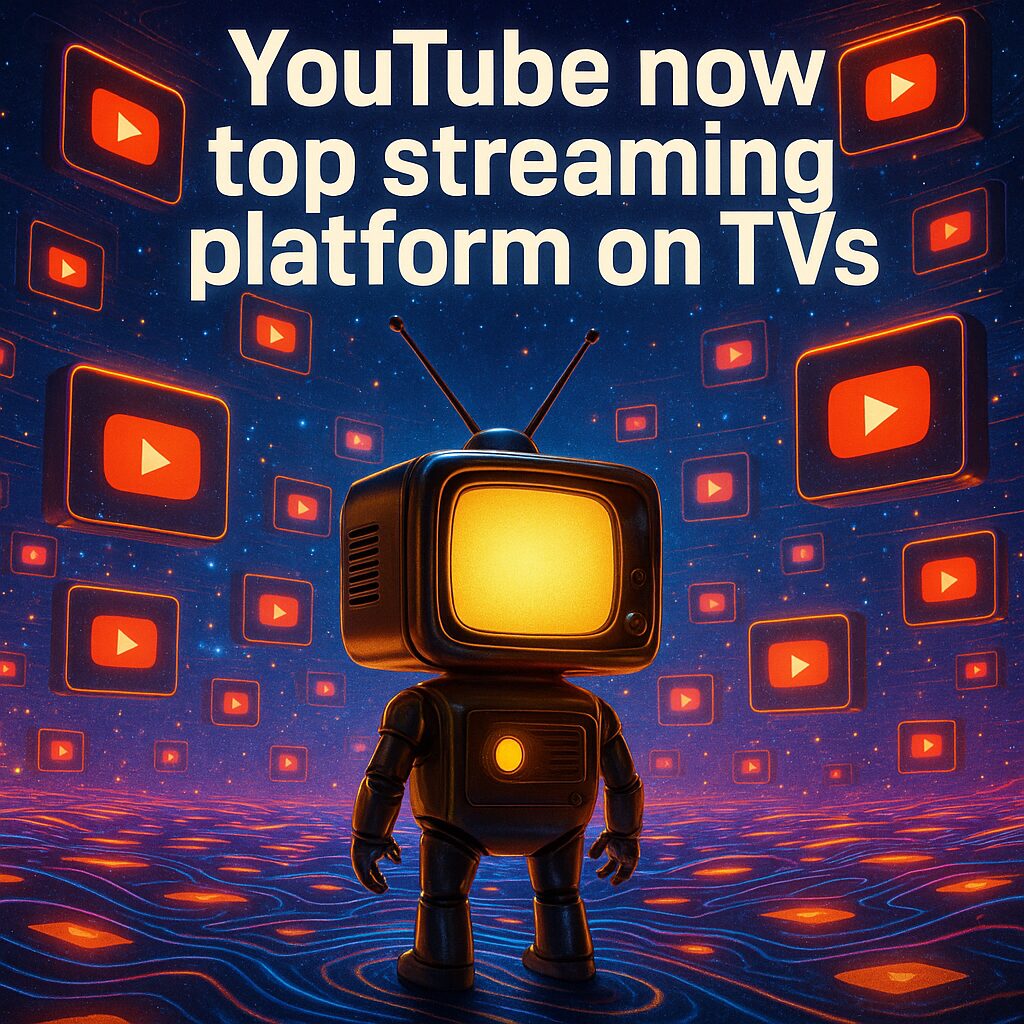
Television has undergone a massive transformation in the past decade, and YouTube has emerged as the leading platform shaping this change. Gone are the days when we gathered around the living room TV, at the mercy of a rigid schedule of shows and limited viewing options. Today, with just a few clicks, users can access a world of content that’s personalized and on-demand. It’s a revolutionary shift, and YouTube is at the forefront, surpassing traditional giants like Netflix and Hulu to become the top TV streaming platform in the United States.
**Unpacking YouTube’s Success**
According to Nielsen, YouTube has achieved what many would’ve considered unthinkable a few years back. It has overthrown Netflix, Hulu, Disney Plus, and other major services to reign supreme on living room TVs across the U.S. It might come as a surprise to some, especially given the robust original content libraries and massive budgets of its competitors. Yet, YouTube’s trump card is not about being bigger; it’s about being smarter.
YouTube offers a highly personalized experience, curating its vast ocean of content to meet individual users’ preferences. It’s not about one-size-fits-all programming anymore. Instead, it’s about targeted, relevant content that engages viewers on a personal level. The platform understands its audience with precision, leveraging vast data sets to recommend videos that align with users’ interests, viewing history, and even time of day.
But the magic of YouTube goes beyond algorithms; it lies in its ability to democratize content creation and consumption. Users aren’t just passive viewers; they’re also creators, making it an interactive and community-driven space. “YouTube didn’t replace TV by being bigger,” states a key point in our analysis, “It replaced TV by being smarter.” This strategic intelligence is what keeps viewers coming back.
**A Personal Experience with the YouTube Revolution**
Reflecting on my own habits, I can attest to this global inclination. It wasn’t until recently that I rearranged my living room setup, dedicating a prime spot to a 50-inch screen with a direct link to YouTube’s universe. I stopped asking, “What’s on TV tonight?” and instead, I now tune into curated playlists that resonate with my nightly mood, be it educational content, light-hearted vlogs, or travel series to fuel my wanderlust.
Several of my friends and family members have echoed this sentiment. We no longer find ourselves channel-flipping in frustration or scrolling endlessly through streaming service interfaces trying to pick “something worth watching.” Instead, YouTube has streamlined our choice-making process, often introducing us to fresh topics or ideas that captivate us.
**Extracting Lessons from YouTube’s Strategy**
There’s a significant learning curve for brands and creators taking heed of YouTube’s model. Whether you’re a marketer, a content creator, or simply a curious observer, understanding YouTube’s success can unlock new vistas for growth and engagement.
– **Personalization Matters:** The age of mass content is dwindling. Personalized content fosters better viewer engagement and loyalty.
– **Diverse Content Offering:** A wide array of genres and formats appeals to broader audiences. YouTube’s mixture of short clips, long-form videos, tutorials, music, and documentaries ensures there’s something for everyone.
– **Interactivity and Engagement:** Unlike traditional TV, YouTube allows for direct interaction—likes, comments, shares—which builds community and enhances user experience.
– **Data Utilization:** Using data to fine-tune recommendations and understand audience behavior is crucial in refining content strategies.
For creators and brands, embracing these principles can lead to lucrative outcomes. Are you leveraging user data to tailor content? Are you encouraging interaction to help build a community around your brand? Take a leaf from YouTube’s playbook and reconsider your approach to content engagement.
**Wrapping Up with Reflection**
In an age overflowing with content choices, the question isn’t just about what viewers will watch but how they’ll choose to watch it. Why has YouTube captivated living rooms to a point where even seasoned streaming services are playing catch-up?
The platform’s rise ushers in an era of unparalleled viewer-centric programming, setting benchmarks for personalized content delivery. It’s a clear indication that viewers today aren’t just seeking high-quality content; they’re seeking a unique experience shaped around their individuality. As traditional TV viewing dwindles, it’s clear that the future lies in platforms that prioritize audience preferences above all else.
As you sit down to engage with video content tonight, perhaps the question that comes to mind won’t be “What should I watch?” but rather, “How can I make my viewing experience as engaging and personal as possible?” Embrace this shift, and consider how platforms like YouTube are not just entertaining, but defining, a new age of television.