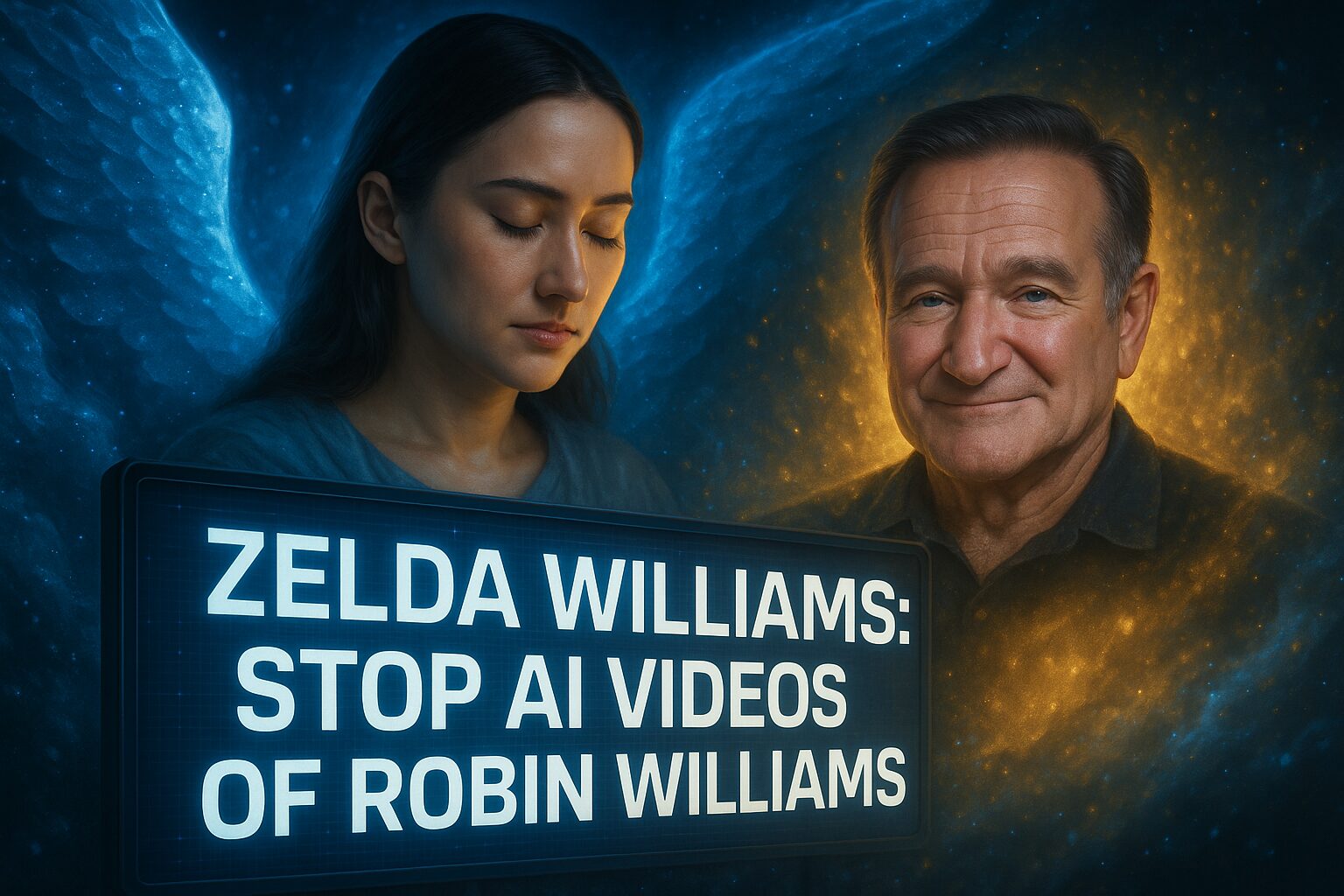
Robin Williams’ daughter Zelda hits out at AI-generated videos of her dead father: ‘Stop doing this to him’
# The Ethical Dilemma of AI-Generated Celebrity Content: A Call for Respect
In a rapidly evolving digital landscape, one conviction rings true: the legacies of beloved figures should never be reduced to fleeting novelties for online amusement. The ongoing debate surrounding the use of AI-generated content to recreate the likeness and voices of deceased celebrities highlights a pressing ethical concern. Zelda Williams, daughter of the iconic late actor and comedian Robin Williams, passionately condemns such practices as disrespectful and harmful.
## Personal Impact and Public Discourse
Zelda has taken a firm stance against the proliferation of AI-produced videos featuring her father, making her position clear in an Instagram story. She states:
> “Please, just stop sending me AI videos of Dad. Stop believing I wanna see it or that I’ll understand, I don’t and I won’t.”
Her message is far from a mere personal gripe; instead, it serves as a rallying cry against the exploitation of her father’s legacy in particular, and celebrity culture in general. She argues that these representations are “disgusting, over-processed hotdogs out of the lives of human beings.”
### A Tainted Legacy
To Zelda and many others, the use of AI to recreate a figure like Robin Williams reduces his multifaceted contributions to mere shadows of his own persona—shadows that fail to capture the nuance, warmth, and humor he brought to his roles. AI recreations simplify a much more complex and nuanced legacy into:
– **Artificial Mimicry:** Poor imitations that lack emotional depth.
– **Ethical Oversteps:** Exploitative content that disregards consent and legacy.
– **Societal Overconsumption:** Products aimed solely at fleeting online engagement.
The discussions Zelda stimulates are not in isolation. Other celebrities like Scarlett Johansson have also highlighted the “imminent dangers of AI,” especially when deepfake technology gets misused in scams and misleading advertising.
## Understanding AI’s Role
The rising concern isn’t solely about the misuse of AI technology to impersonate known figures. It’s about understanding the broader implications of these advancements. While AI technology holds immense potential for enhancing creative projects and solving complex problems, its application in generating shallow replicas of public figures asks us to reconsider its ethical boundaries.
### Learning and Unlearning: A Broader Perspective
To fully grasp the ethical tangles of AI in entertainment, it’s crucial to understand both its pros and cons:
– **Pros of AI:**
– **Innovation:** Powering transformative technologies across sectors.
– **Efficiency:** Streamlining processes in industries like healthcare and logistics.
– **Cons of AI:**
– **Exploitation:** Unconsensual reproduction of personalities.
– **Devaluation of Art:** Simplification and mass production of content.
– **Impact on Reality:** Difficulty discerning real from fake, affecting public trust.
Within this framework, AI’s mimicry practices become a glaring issue. As Zelda puts it, these AI-produced videos represent “a horrendous Frankensteinian monster, cobbled together from the worst bits of everything this industry is, instead of what it should stand for.”
## Emotional Call to Action: What Will We Choose?
As digital content consumers, the power we wield is immense. Our choices contribute to setting the standards for ethical digital content creation. This brings us to a pivotal question: How do we choose to engage with the legacies of celebrated individuals?
The proliferation of AI-generated deepfakes helps us reflect:
– **Who truly benefits from these digital recreations?**
– **What does it say about us when we prioritize fleeting entertainment over respectful remembrance?**
The onus is on us to forge a path that honors the individuals who have shaped our cultural landscapes, like Robin Williams, and to ensure that the digital reincarnations of their personas uphold the dignity they so deserve.
As AI technologies continue their relentless march forward, we must pause and consider not just the technological possibilities but the human repercussions. In doing so, we preserve the essence of what makes these individuals unforgettable — their authentic selves. By listening to voices like Zelda’s, we take a step towards a more respectful future where innovation and humanity go hand in hand, honoring the legacies of those who have left indelible marks on our world.