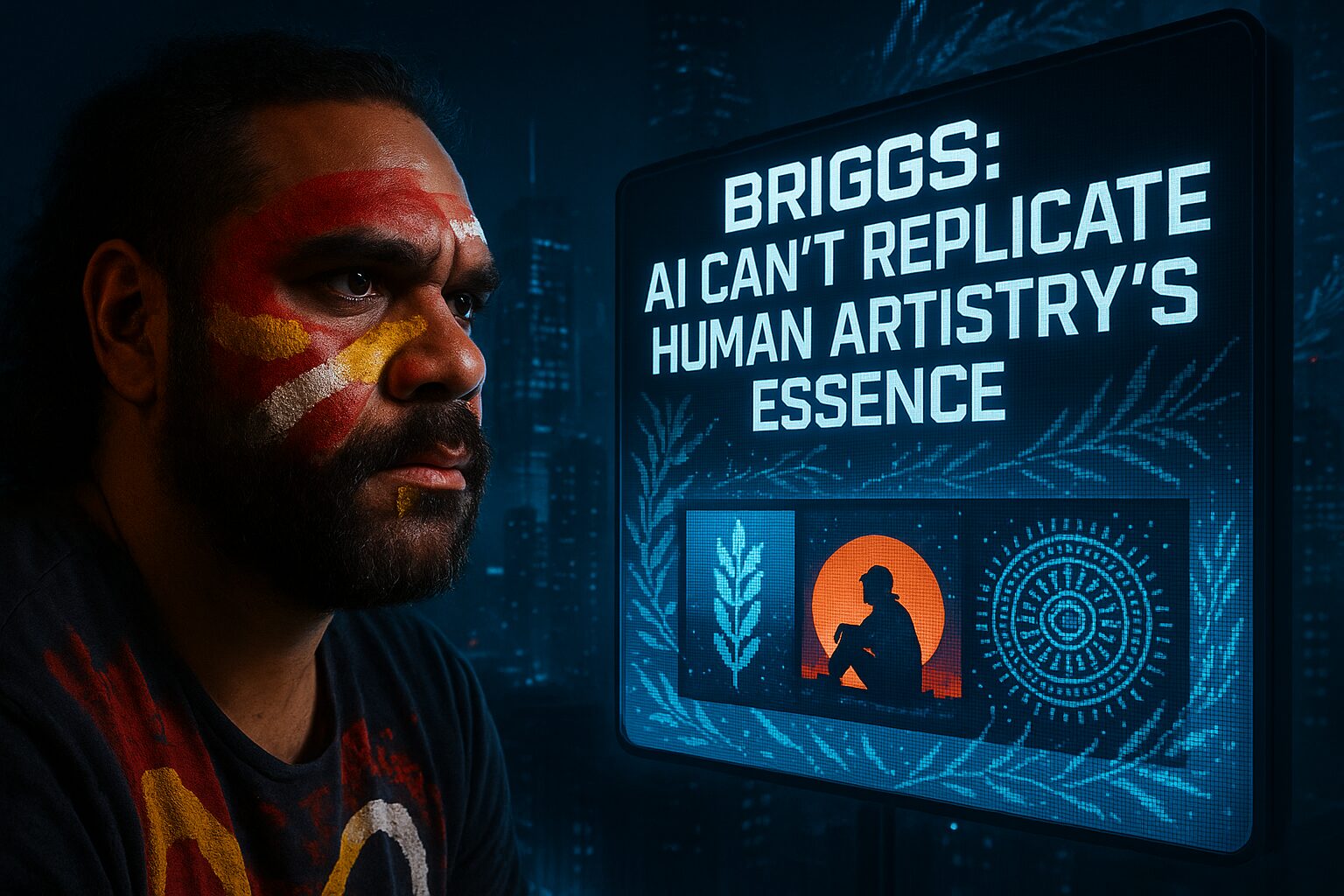
Briggs on AI replacing him: it doesn’t know ‘what a lounge room in Shepparton smells like’ – video
# The Soul of Music: Why AI Can’t Replace Human Creativity
In a world increasingly driven by technology, the creative realm is facing a seismic shift with the rise of artificial intelligence (AI). From AI-generated art to music compositions, machines are encroaching upon areas traditionally reserved for human touch and expression. The question many are grappling with is: Can AI truly replicate the human experience in art creation? Australian rapper Briggs offers a resounding “no” and dives into why protecting the originality and authenticity of artistic endeavors is necessary for the survival of human creativity.
## Understanding the Uniquely Human Experience in Art
Briggs recently joined a panel of Australian creatives to explore the implications of AI in the world of art and music. When independent senator David Pocock inquired whether AI could replicate his unique style of music, Briggs was quick to dismiss the possibility. He responded, “I doubt it very much. I don’t think AI at the moment understands what a lounge room in Shepparton, Victoria smells like. It is the innate human quality of the art.”
This simple yet profound statement cuts to the heart of why AI, sophisticated as it may be, lacks a crucial component of artistic creation: the human experience. At its best, art serves as a window into the soul, reflecting the depth of human emotion, individual perception, and nuanced experiences that are innately personal and cannot be reduced to code.
## The Human Touch: Why It Matters
– **Context and Emotion**: AI models may understand patterns and structures, but they cannot feel emotions or context in a way humans do. Songs and art connect with us because they resonate on an emotional level, often drawing from deeply personal experiences and cultural backgrounds.
– **Authenticity and Originality**: AI-generated art often relies on pre-existing data to create new works. This can result in outputs that, while novel, lack the originality that stems from a unique human perspective. Briggs argues that originality is at risk if AI-generated content gains a strong foothold in the art world.
– **Cultural Specificity**: Like Briggs noted about understanding “what a lounge room in Shepparton, Victoria smells like,” art is often deeply rooted in specific cultural contexts. These nuances are challenging for AI to grasp fully, as they require lived experiences and cultural intuitions that machines do not possess.
## Safeguarding Creative Rights
Briggs emphasizes the need to safeguard creatives’ rights in light of AI technology’s rapid advancements. Protecting the integrity of artistic work is crucial to ensuring that human creatives receive the recognition and compensation they deserve. If AI-generated art becomes indistinguishable from human-made art, the risk of exploiting creative rights magnifies, potentially leading to a devaluation of human artistry.
### Steps Toward Protection
– **Legislative Action**: Laws must evolve to define and protect intellectual property rights in the context of AI-generated works. This includes establishing clear guidelines on what constitutes original art and how AI creations should be attributed and remunerated.
– **Advocacy and Awareness**: Artists and musicians need to come together to advocate for their rights actively. By raising awareness about the challenges AI poses, the creative community can foster conversations that lead to protective measures.
– **Ethical AI Development**: Tech developers should prioritize ethical considerations in AI as it relates to creativity. This includes fostering partnerships with artists to better understand the nuances of human creativity and find ways AI can augment rather than replace the artistic process.
## A Learning Moment: Embracing Technology and Humanity
While it’s easy to view AI as a threat to traditional artistic methods, it can also be a tool for exploring new frontiers in creativity. The key is balance. Here are some ways in which humanity and technology can harmoniously coexist:
– **Collaborative Art**: Instead of an AI-versus-human narrative, consider AI as a partner in the artistic process. Artists can harness AI to experiment with new styles or overcome creative blocks, sparking inspiration in novel ways.
– **Transforming Distribution**: AI can revolutionize how art is distributed and consumed, offering artists innovative ways to reach wider audiences and deepen engagement.
– **Enhancing Skills**: By automating repetitive or technical aspects, AI can free up time for artists to focus on honing their skills and exploring more profound creative quests.
The real challenge lies in channeling AI’s potential to expand human creativity rather than diminish it. By recognizing AI’s role as a tool rather than a replacement, we can safeguard the depth of the human experience within art.
## An Open Question of the Soul
As we stand at the crossroads of technology and art, one might ask: How will we choose to shape the future of creativity? Will we allow machines to dictate the narrative, or will we find a way to let the human spirit dance in tandem with technology? Only through dialogue, deliberate action, and a commitment to safeguarding the essence of humanity in art can we ensure that art continues to be a reflection of the vibrant, diverse, and deeply emotional human experience.
Thus, as the landscape of creative expression evolves, it’s vital to consider where we are willing to draw the line between man and machine.