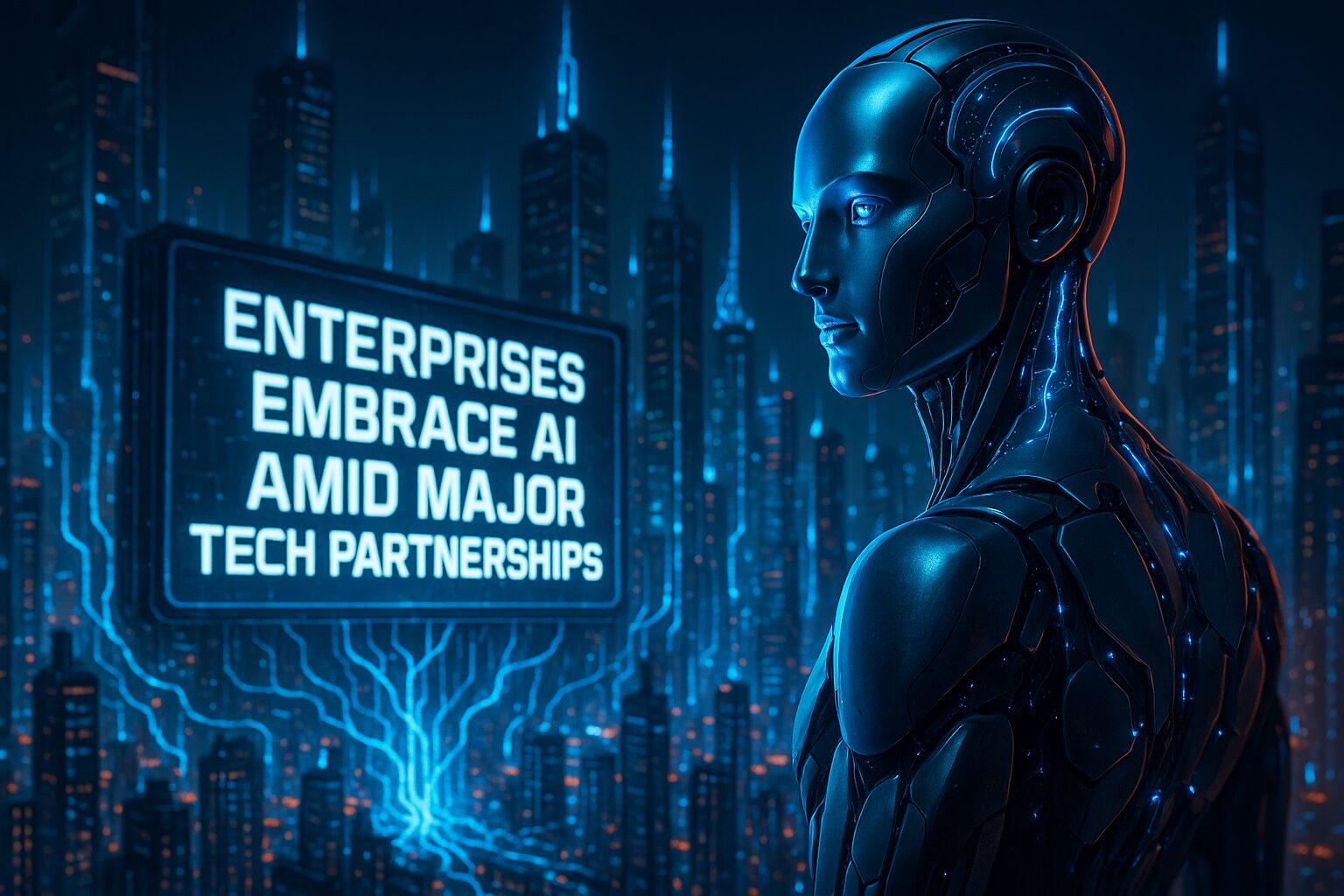
Ready or not, enterprises are betting on AI
# The Rise of AI in Business: Navigating Opportunities and Challenges
As artificial intelligence continues to evolve, its impact on various industries becomes increasingly substantial. The potential for AI to transform businesses has never been more apparent, particularly with recent developments involving major players like Zendesk, Anthropic, IBM, Deloitte, and Google. This week, these companies unveiled significant AI enterprise deals that emphasize the burgeoning role of AI in the corporate world. However, while the promise of AI in streamlining business processes is substantial, it is not without its challenges and controversies.
## The Surge of AI Enterprise Deals
It’s a pivotal moment for AI companies as they unlock new avenues for revenue generation through enterprise-level engagements. A prime example is Zendesk’s recent launch of AI agents designed to handle up to 80% of customer service queries. This development reflects a growing trend where AI is not just an add-on but a core component of business operations. As Sean explains, these technologies are poised to revolutionize customer interactions:
“There are a bunch of different startups that are developing full customer service suites, voice agents, LLMs for emails and texts [from] dealerships and service centers.”
Such innovations promise to enhance efficiency and customer satisfaction by offering quicker responses and reducing the dependency on human agents, often bogged down by high volumes and repetitive tasks.
Anthropic’s partnerships with IBM and Deloitte further underscore this shift. These alliances aim to leverage cutting-edge AI for sophisticated business solutions, marking a significant step in AI’s integration into corporate operations. Google’s introduction of an AI-for-business platform adds to the momentum, providing companies with tools to streamline workflows and unlock deeper insights from data.
## Challenges and Controversies in AI Utilization
Despite these advancements, the road to seamless AI integration is fraught with challenges. The very day Deloitte announced its partnership with Anthropic, it faced criticism for delivering a report containing several AI-generated inaccuracies, or “hallucinations,” to the Australian government. This incident highlights a critical issue with today’s AI technologies—their occasional unreliability in producing accurate data without human oversight. As Anthony mentions:
“It’s not necessarily that no one should ever use AI in the creation of these kinds of reports…But if you’re going to do it, you actually have to be responsible for the outputs.”
This critique is a timely reminder of the responsibilities accompanying AI deployment. Companies must exercise due diligence in verifying AI-generated data to avoid missteps that could lead to consequences such as public embarrassment or financial penalties.
## Learning from the AI Frontier
The surge in AI enterprise deals points towards a future where AI plays a central role in business functions. Still, it’s clear that companies must balance innovation with responsibility. The key takeaways for businesses considering AI integration include:
– **Due Diligence**: Always verify and cross-check AI-generated information before using it in critical decision-making processes.
– **Accountability**: Educate teams on the importance of being accountable for AI outputs, ensuring they are ready to address any inaccuracies or issues that may arise.
– **Investment in AI Training**: To fully harness AI’s potential, businesses need to invest in training their workforce to work effectively with these technologies.
– **Incremental Implementation**: Adopt AI gradually, ensuring each new tool’s effectiveness before scaling further.
## A New Dawn or Another Tech Overhaul?
The unfolding narrative of AI in enterprise raises a pertinent question: How might businesses navigate this new phase in technology evolution? Will this drive towards AI lead to unprecedented efficiencies and growth, or is it merely the latest trend that businesses must incorporate? As companies adopt these advanced tools, they must consider the broader implications—how will AI not only shape their operations but also define their legacy in the rapidly transforming digital economy?
Ongoing developments in AI offer a view to a future that is both promising and challenging. The coming years will showcase how businesses balance innovation with ethical responsibility as they explore AI’s potential as both a powerful ally and a complex tool requiring judicious handling. Are we on the cusp of a business revolution driven by AI, or is the technology landscape merely evolving to accommodate current trends? The answer begins to unfold as more enterprises embark on this AI journey.